Defining the roles of microglia and oligodendrocyte precursor cells (OPCs) in sensory-dependent circuit refinement, plasticity, and function
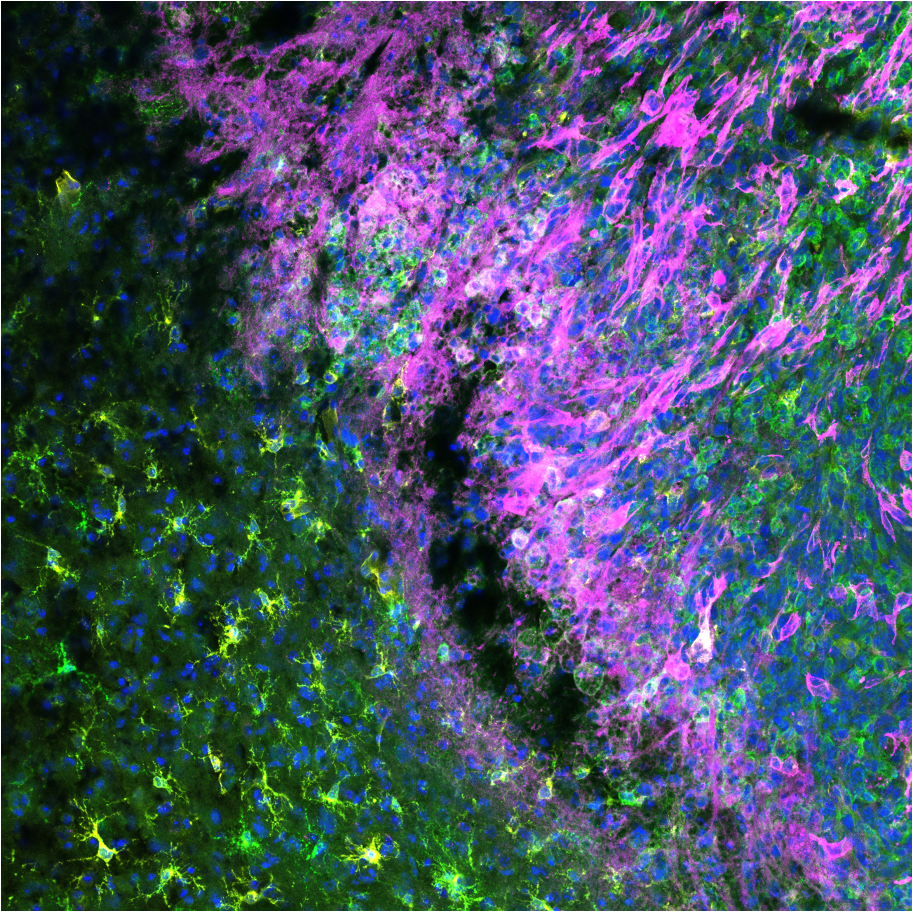
Environmental signals, such as sensory experience and pathogenic infection, exert powerful influence over the development, plasticity, and function of neural circuits. However, the cellular and molecular mechanisms underlying these interactions are poorly understood. Our lab employs an array of techniques—including in vivo two-photon microscopy, electrophysiology, and single-cell multiomics—to dissect the roles of microglia and oligodendrocyte precursor cells (OPCs) in refining synapses in the developing and adult brain. In particular, we study how these non-neuronal cell types elicit the dynamic removal of synapses through phagocytic engulfment in response to environmental cues.
Multimodal characterization of neuron-OPC synapses in health and disease
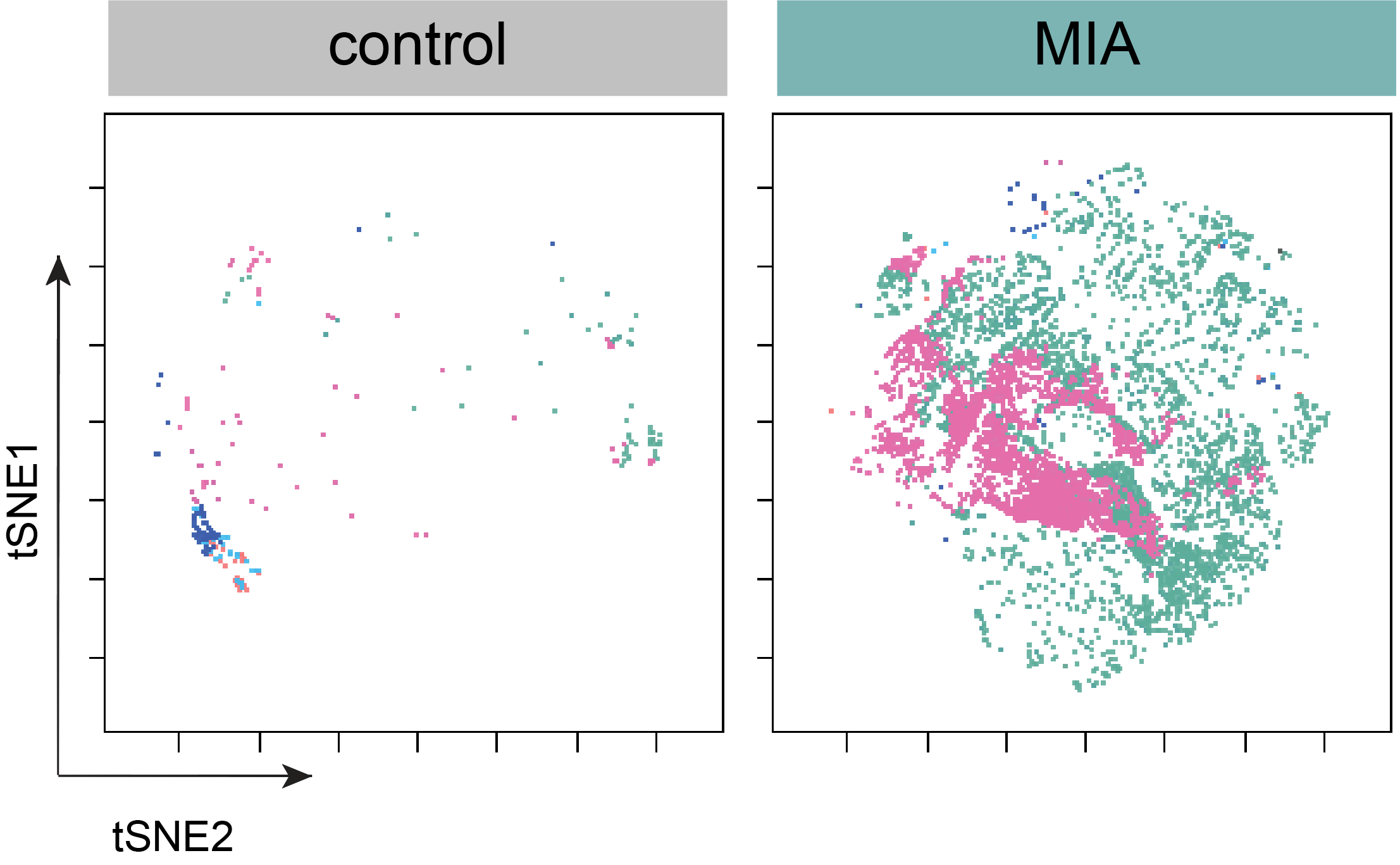
OPCs are the only non-neuronal cell type that forms bona fide synapses with neurons. However, almost nothing is known about the form, function, molecular composition, and regulatory mechanisms that define these specialized loci of neuron-glia communication. We are comprehensively illuminating the enigmatic neuron-OPC synapse through a multi-disciplinary strategy that includes subcellular proteomics in OPCs, imaging, in vivo activity and circuit manipulations, and electrophysiology. We apply these approaches to genetic and inflammatory models of autism spectrum disorder to define new roles for OPCs in brain development and as drivers of neurodevelopmental dysfunction.